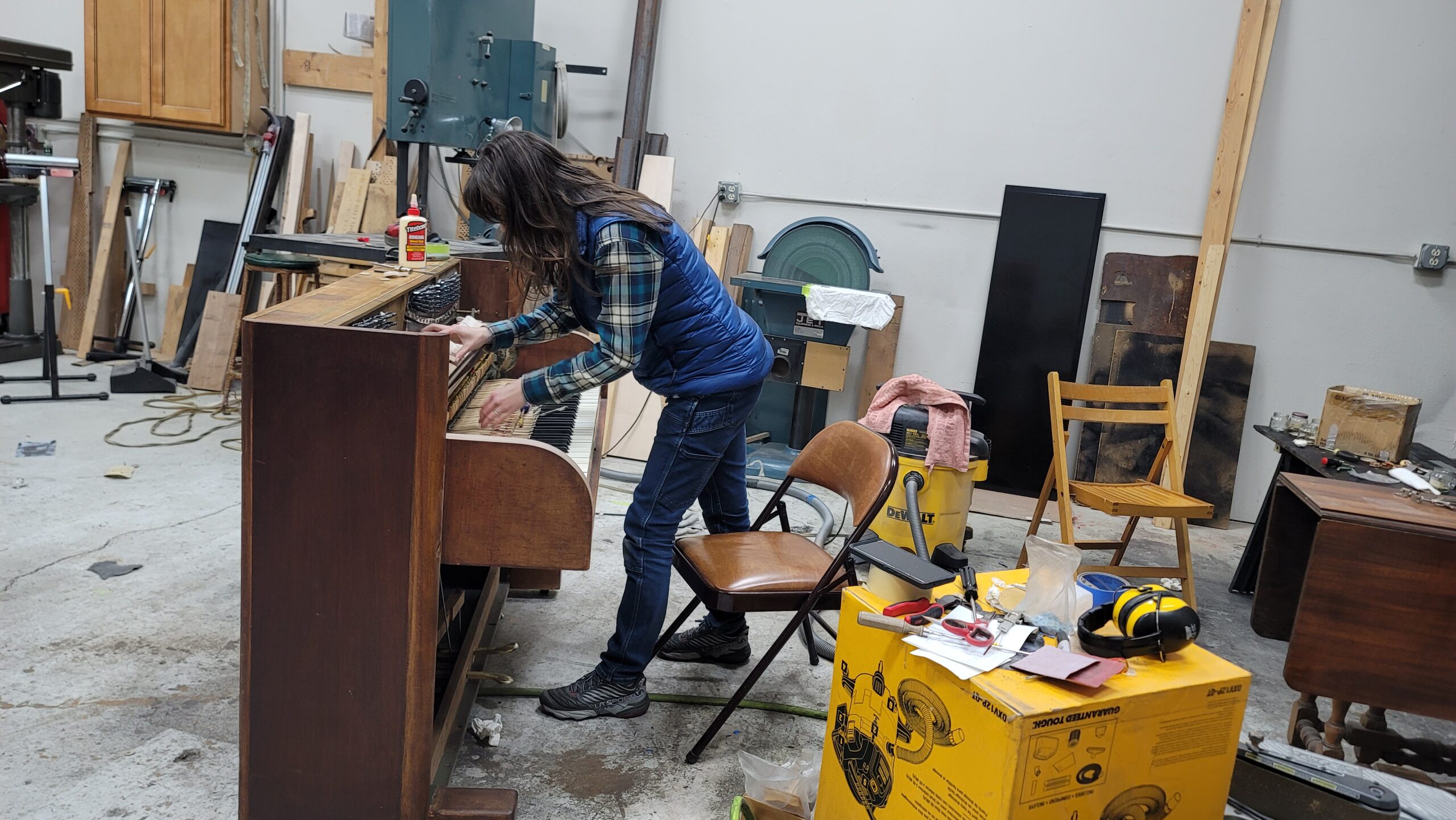
Most folks in the piano world want restorations done “by the book.” Keep the finish. Follow the specifications. Rebuild as if you’re rewinding time.
But what if the book isn’t the whole story?
Pianos aren’t just instruments—they’re witnesses. They’ve survived wars, fires, floods. They’ve sung in living rooms and cried in concert halls. They’ve lived. And sometimes, the life they’ve lived deserves to be heard as much as the music they make.
When I rebuilt my 1925 Steinway L Grand after it had survived both fire and water, I chose not to repaint the soundboard. It’s still blackened. Some colleagues wince when they see it because it’s not what it “should be.” Others find it striking, powerful. I find it honest.
I also added a carbon fiber action and lightened the keys—choices the original builders couldn’t have imagined, but that make the piano sing like never before. It plays better than it ever did. Not just rebuilt, but reborn.

Another legacy project was a Steinway Victory Vertical, once coated in army drab. Its owner—a war hero—stripped the paint after the war as a statement that the piano would never need its war paint again. I could’ve repainted it, but I didn’t. That sentiment, that story, is built into the wood now.
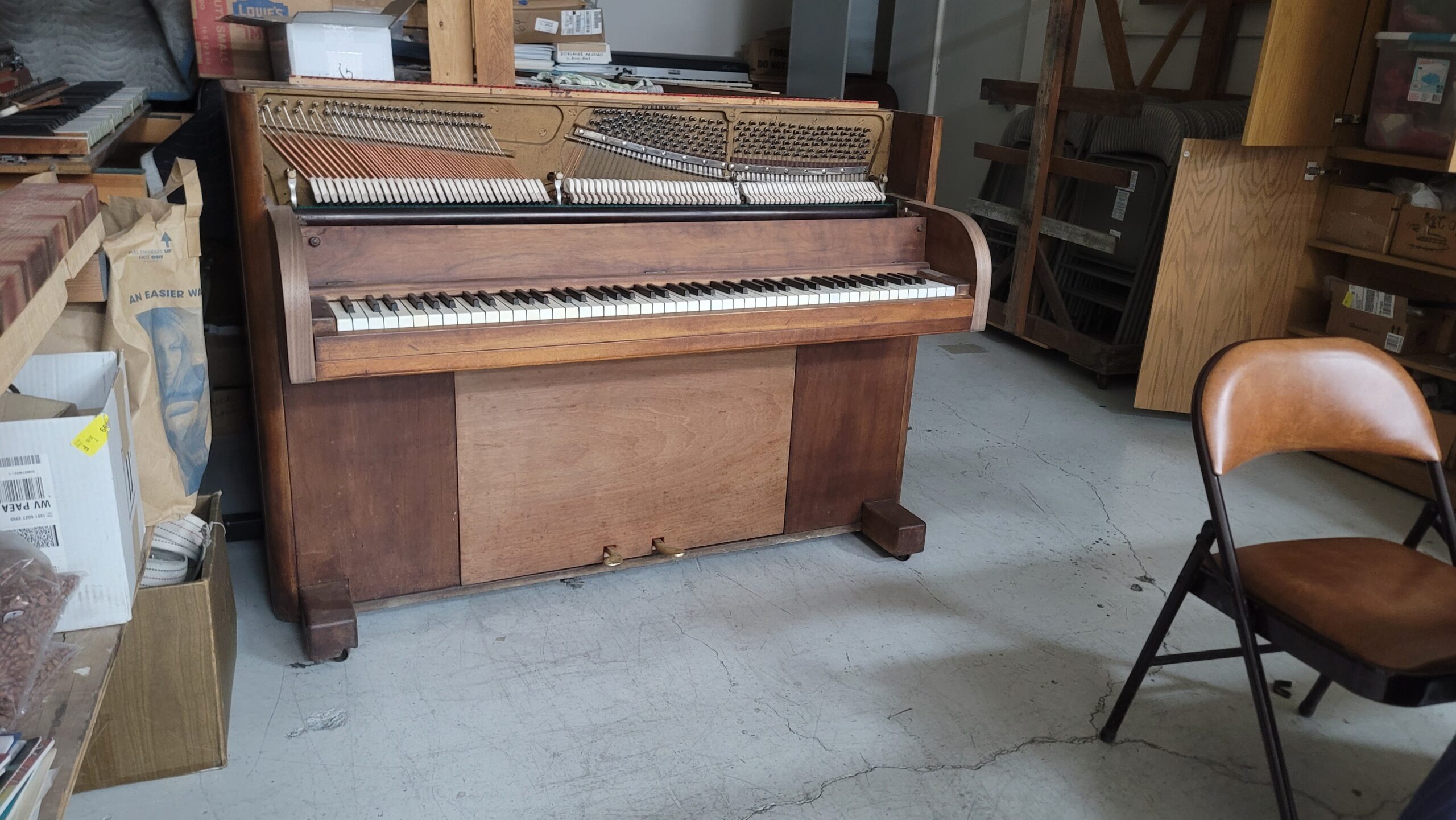
Don’t think I am turning up my nose at by-the-book restoration; I am not. Traditional restorations serve as reference points—plumblines to the original design, marking the beginning of a piano’s lifetime. They adhere to what is consistent and unified, which is essential to historic preservation. But while I believe in honoring design, I also believe in honoring history, not just the history written in manuals, but the kind that’s carried in soot, fingerprints, and sound. I ask: how is this piano different? What story does it tell? Then I translate. There’s no formula, just observation and listening–to the wear in the wood, the scars on the soundboard, to the voice it’s developed, and the people who’ve played it.
Sometimes the story asks to be told quietly through the feel of lighter keys or a more responsive action. Other times, the story is loud: a blackened soundboard, a stripped finish, a war piano reborn for peace. Every detail speaks. It might not always make everyone comfortable, and that’s fine. It’s not supposed to. My purpose is to perpetuate legacy by restoring what a piano was without removing what it has become.
A good piano can sing; a great one tells a story. When restored correctly, a pianist might sit down and play the same piece they’ve played a hundred times, but this time, it will feel different. Richer. Lived in. With resonance not just from tone but from time, like the piano is playing back.
So should I do it by the book?
Sometimes.
But sometimes, I need to let the piano write its own chapter.
History doesn’t always need replication. Sometimes it needs release.